Why Are Testimonials Important?
Before a consumer can feel comfortable sending their hard-earned money to a particular business, they need to know that the company is trustworthy. Social proof can be a compelling motivator for new customers, and great testimonials help provide it.
A good testimonial may also help a new customer connect with your brand on a more personal level and inspire future loyalty right out of the gate.
How to Ask for a Client Testimonial?
Up to 79 percent of consumers say they’re as likely to trust an online testimonial or review as they are to believe a personal recommendation that comes straight from a friend or acquaintance.
Your current loyal customers are your best brand advocates. So if you’re not already asking them for testimonials, it’s officially time to start. Here are a few tips on how to ask for a testimonial and increase your chance of getting it.
Nail the timing
The best time to ask a customer for a testimonial is soon after they have their first positive experience. For a retail item like a t-shirt or food product, that’s likely right after they receive the item. But for a SaaS service, it might be a month later, when they’re first starting to see results in their bottom line.
Provide an incentive
Your customers are busy people and can’t give their time to everyone who contacts them to ask for something. But you can use incentives to increase the chance that they’ll say yes. You could offer a gift card, discount code, or other rewards to sweeten the pot. However, you may be legally required to disclose the incentive on your website.
Make it easy
The easier you can make it for customers to submit their testimonials, the better. Give them multiple options; video, audio, social media, and written reviews are all terrific choices to offer.
In practice, asking for a testimonial can feel awkward if you’re not used to it. But don’t be afraid to reach out—most people who are genuinely happy with your product are also happy to share that experience. Keep your message straightforward and personal, maybe even address them by name and mention specifics you recall from their purchase or feedback. Little touches like that can nudge someone toward responding, just because it doesn’t feel automated.
It’s also important to experiment a bit. Sometimes what works for one audience falls flat for another. You might find that shooting off a quick, casual email brings way more responses than a polished form or formal survey. Trust your instincts and don’t get too caught up in a one-size-fits-all script here. At the end of the day, people just want to feel seen and appreciated when you ask for their story.
Adding a dedicated page to your website with lots of testimonial examples could give customers a better idea of what you want from them.
What Makes a Good Testimonial?
Your clients will need some guidance from you on how to create effective testimonials. Here are some key factors to keep in mind regarding how to write a testimonial that resonates.
- Authenticity: Great testimonials are genuine and should give readers a unique insight into how a product or service has improved the customer’s life. People connect best with other people and have authentic voices.
- Specificity: Effective testimonials go beyond vague statements like “great product.” They provide details as to what worked well about the product, what the user liked, and so forth. Try asking your customers pointed questions to encourage them to provide these details.
- Conciseness: Remember, today’s consumers are busy and don’t have time to read through testimonials that ramble on for multiple paragraphs. Good on-page testimonials are concise, direct, and get to the point using action-focused words that inspire emotion.
11 Great Testimonial Examples
Ready to see what a great testimonial looks like in action? Here are some stellar testimonial examples that get it right.
1. Zoom

This testimonial works because it highlights everything awesome about Zoom, including the way it can bring loved ones together in a meaningful, authentic way. It also leverages social media to reach new leads.
2. Startup Institute
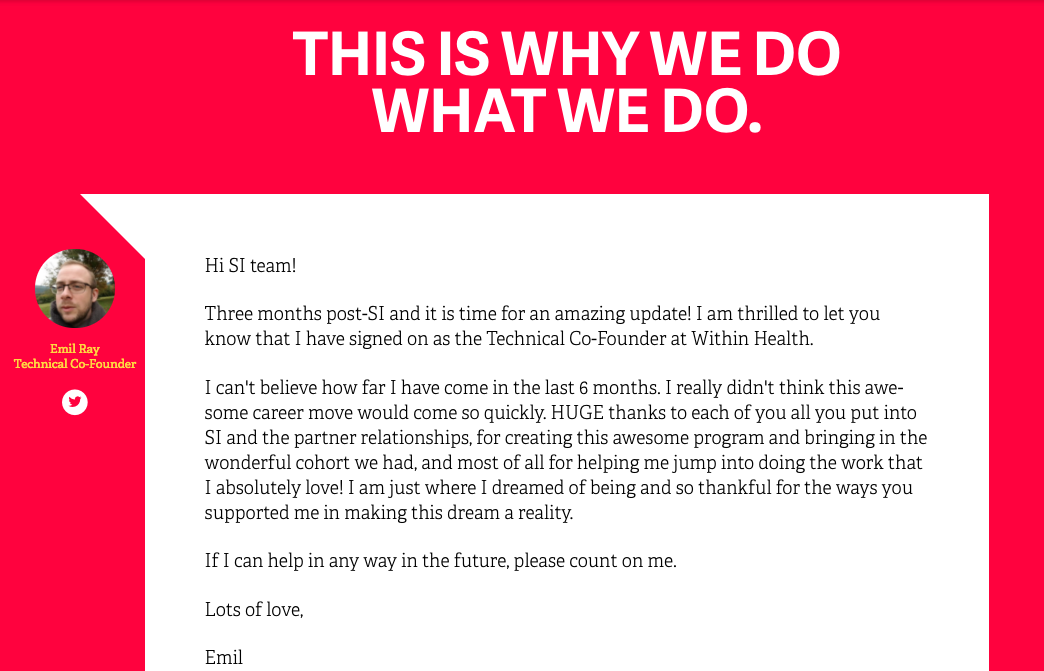
This incredible idea involves displaying client testimonials as heartfelt letters, an approach that helps personalize the messages. It’s also a great way to use storytelling to paint vivid pictures for prospective future clients.
3. Koble

This testimonial is short, sweet, and to the point as good testimonials should be. It further personalizes the message with a name and photo.
4. Codecademy

Codecademy uses an interview process to obtain authentic, detailed testimonials from its users. Photo thumbnails and pull quotes help capture attention while links to full learner stories offer the option to read more.
5. Simple Green Smoothies
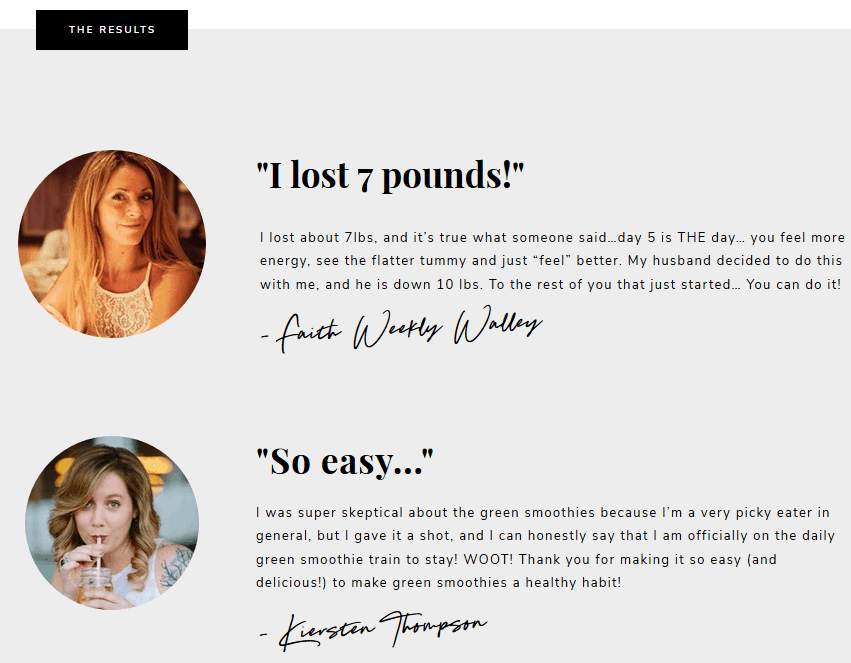
These testimonial examples from Simple Green Smoothies work well because they focus on positivity and ease of use. Happy photos and energetic signatures help personalize the content.
6. Ahrefs

Ahrefs successfully leverages testimonial examples from peers to better connect with a niche audience. Photos, names, and quote bubbles help drive home the fact that these are the words of real people.
7. Canva
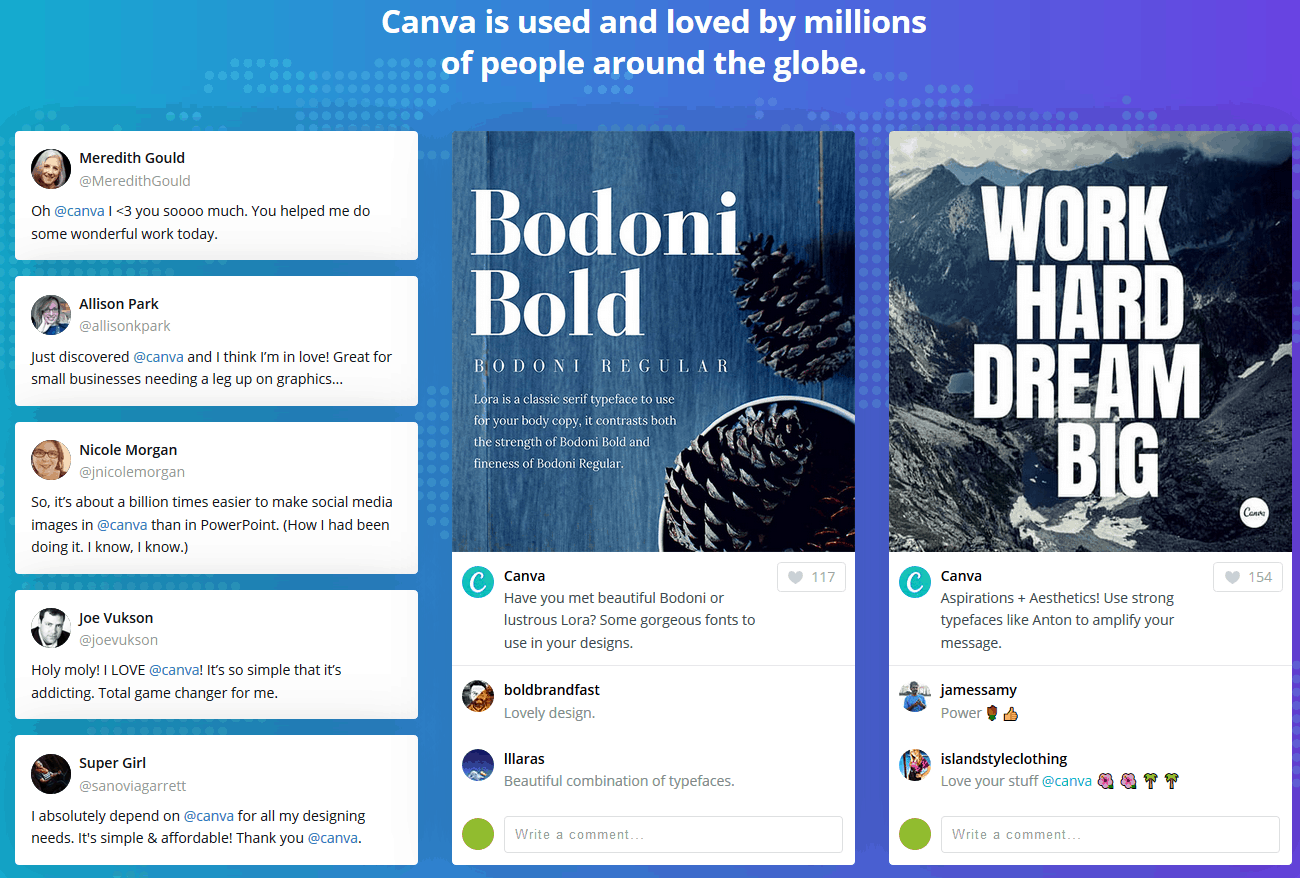
Check out the way Canva combined social media testimonials from both Twitter and Instagram to showcase how many people their product reaches around the world—social proof at its best.
8. Tony Robbins
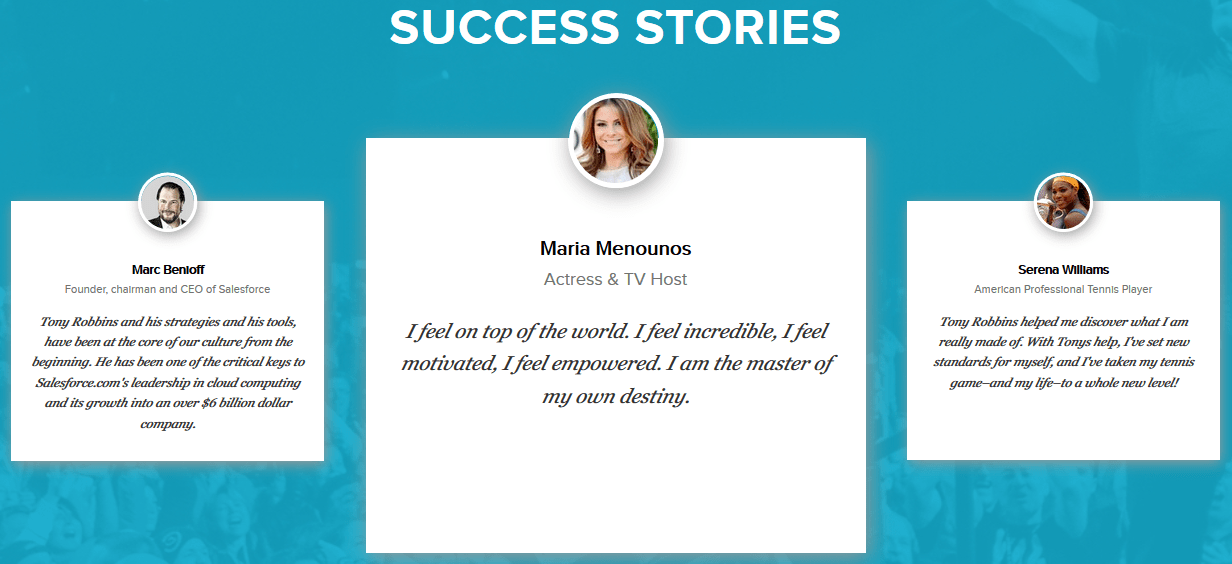
Testimonial examples from influencers and thought leaders carry a lot of weight. Use them to your advantage if you have them.
9. Salesforce

When it makes sense, adding testimonials to your homepage or about us page is a great way to win your visitors’ trust right away. Salesforce did this perfectly.
10. Shopify

Although on-site testimonials should always be on the brief side, there are advantages to having your biggest success stories contribute longer testimonials as guest blogs. Shopify is especially proficient at this.

Similar to other examples, this is a concise yet impactful testimonial about an interactive content product. It highlights one of its functionalities and employs adjectives like “best possible,” conveying the client’s satisfaction effectively.
Conclusion
Ultimately, the happy customers you already have are your best assets when it comes to inspiring trust in new people. The right professional writers can add even more impact to your best testimonial examples by helping you weave them into your brand storytelling, expand them into insightful case studies, and more.