What to expect from SEO from now on
A recent Gartner report predicts a 50% drop in organic search traffic by 2028 due to AI search.
This may appear concerning, but instead of jumping to conclusions, let’s consider a more nuanced perspective. The new recent prediction from Gartner states, “By 2028, brands’ organic search traffic will decrease by 50% or more as consumers embrace generative AI-powered search.”
From the same report:
“The rapid adoption of GenAI in search engines will significantly disrupt CMOs’ ability to harness organic search to drive sales. A Gartner survey of 299 consumers in August 2023 found consumers are ready for AI-enhanced search, with 79% of respondents expecting to use it within the next year. Furthermore, 70% of consumers expressed at least some trust in GenAI-backed search results.”
Still, from Gartner:
“CMOs must prepare for the disruption that GenAI-backed search will bring to their organic search strategies. Marketing leaders whose brands rely on SEO should consider allocating resources to testing other channels in order to diversify.”
Undeniably, the landscape is shifting. AI is weaving its way into search, promising personalized results and conversational interactions. Bing’s Fabrice Canel envisions “a completely new way to interact with the web,” blurring the lines between search and chat.
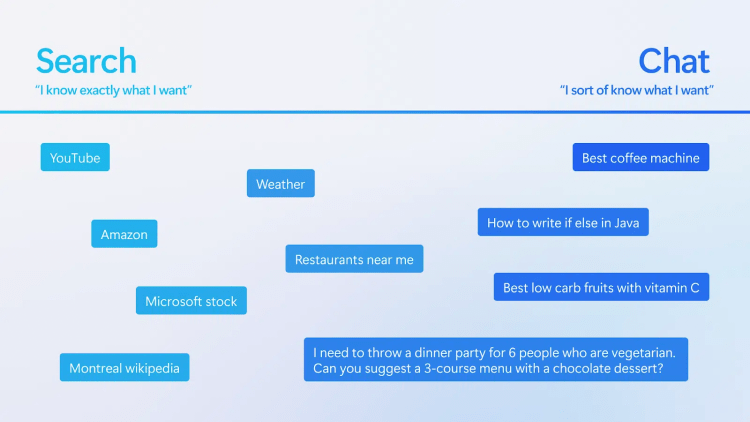
This is in a way exciting, but as Kieran Flanagan points out, it’s not quite time to toss our SEO textbooks out the window.
“What should brands do? Test other channels? Let’s be honest; no other channel is as predictable or scalable as search. The beauty of search is once you’ve built an engine, it’s easy to forecast and directly tie back to revenue, both organic and paid. Marketers won’t need to ‘test’ new channels; they’ll need to rethink how they approach marketing.”
SEO offers predictability and scalability. It’s one of the engines that drives organic traffic, fuels sales, and keeps our marketing budgets active. AI search, for all its futuristic appeal, lacks that same formula. It’s the shiny new gadget we’re eager to play with, not the trusty tool we rely on daily – not yet, at least.
One thing that’s become clear, especially if you’re talking to folks working inside larger brands, is that panic isn’t really the default mode. There’s this quiet, collective recalibration happening—most teams are keeping the classic SEO playbook running while watching AI search with a bit of side-eye, not full-blown paranoia. No one wants to gamble the established ROI on a channel that’s still evolving, not until the numbers and patterns settle into something you can actually translate to boardroom PowerPoints without a dozen asterisks.
But day-to-day, conversations have started to shift. Instead of obsessing over top-spot rankings on Google alone, teams are pulling in feedback from customer support, tracking what people actually ask for inside chatbots, and analyzing where AI-driven snippets are leading people after that first answer. Sometimes that data points to new opportunities (or, honestly, weird blindspots nobody prioritized before), opening doors for experiments that would’ve seemed fringe back in, say, 2021. It’s not revolution, but it feels a lot like the start of a long, sometimes awkward transition phase.
But that doesn’t mean we should ignore AI in Search. It’s time to crack open our toolboxes and get curious. As expected, there is no literature on this specific subject, but I found Wil Reynolds’ posts eye-opening.
Questions that AI in Search has left
Now, here are some questions that should be keeping us up at night:
- Chat Search Brand Visibility: If our brand dominates Google’s SERPs, does it translate to the chat search domain? How visible is my brand in AI search? We have learned how to use SEO analytics and Share of Search to better understand our company brand’s awareness and its position against the category’s competition. How will AI search change the game? We need new metrics, new maps to navigate this uncharted territory.
- The KPI Dilemma: Gone are the days of simple “top X ranking” glory. In a chat-driven world, how do we quantify success? How do we justify ROI? We need to adapt our strategies, anticipate moves, and think several steps ahead.
- Competitive Intel: Keywords were once our intel, revealing our rivals’ SEO strongholds. But in the domain of chat search, who are our true competitors? Are they the established players or new startups wisely playing with AI algorithms?
Questions, AI in Search, summary:
- How visible is my brand in AI search?
- How can we rank in top X positions?
- Who are our competitors and what visibility have they gained?
The answers, for now, are uncertain. It’s an invitation to experiment, to break free from the known boundaries of traditional SEO, and to embrace the playful spirit of discovery. It’s like going back to the early days of search.
A few final thoughts
While the lack of dedicated tools for measuring brand visibility in AI chats presents a temporary issue for marketers, I anticipate a new gen of analytic tools emerging soon, and not necessarily from the usual SEO power players.
It’s crucial to remember that a potential shift from traditional search to AI-powered search doesn’t equate to inevitable catastrophe.
Decreases in organic traffic and traditional ranking reports might simply reflect a change in where consumers are finding your brand. They may be searching differently, but they are searching for you nonetheless.
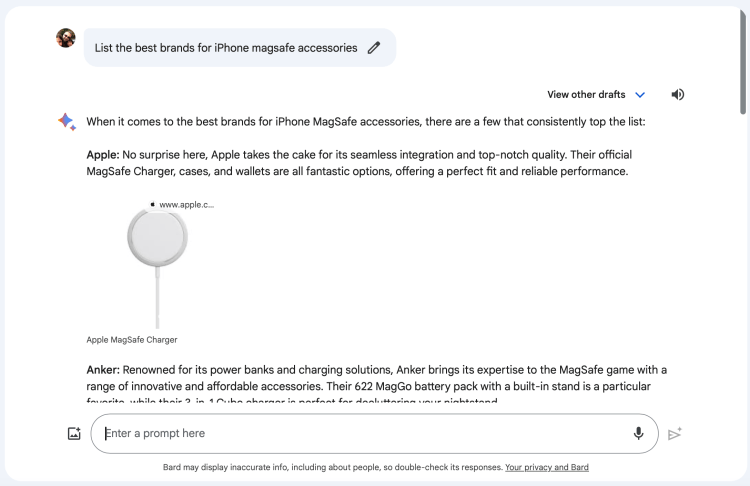
So, let’s not panic about potential changes with SEO; instead, let’s treat AI search as an evolutionary step, a chance to ignite our creativity and rewrite the marketing rulebook.
The future of SEO is ours to write.