What is an interactive white paper?
To understand what an interactive white paper is, you first must know what a static white paper is.
Think of a material offering advanced content on a subject, including a compilation of the problems and their respective solutions. That’s a white paper.
An interactive white paper is a format of engaging interactive content that raises the causes and solutions of a problem.
In other words, the material only progresses if the user gets involved.
It’s important to remember that a white paper delivers content generally in a more technical language and more in-depth than other materials, such as e-books and infographics. Perhaps because of this, it’s less popular than the former.
Another reason for the reduced use is its main goal: to rescue prospects that have already accessed some content from the decision stage and have not taken further action.
Also, it eventually helps to rescue people who used to be customers of the company but broke ties.
The interactive white paper is a way to warm up those contacts again and generate qualified leads (SQLs) for the sales team.
What Are the Benefits of This Interactive Content Format?
Many marketing professionals considered the static white paper to be “too boring” precisely because of its denser properties.
The interactive version allows for a much better audience experience.
A survey conducted by the Content Marketing Institute found that 87% of marketers agree that interactive content, of any format, captures the reader’s attention better than static content.
More importantly, 77% of these professionals believe that interactive content can increase the company’s visibility, generate repeated visitors, and increase access to different materials.
Of course, one thing you start noticing with these interactive pieces is how they can move beyond the text and visuals you’d typically see. There’s an opportunity for quizzes, calculators, and little decision-tree experiences—stuff that gives the reader something back, even if it’s just a quick insight into their own process. It’s subtle but shifts the entire vibe from “here’s a report” to “let’s figure this out together.” No wonder people stick around a bit longer when it’s interactive.
The accessibility factor can’t be ignored, either. Sure, technical audiences might appreciate dense, static content, but that’s not always everyone’s cup of tea. A clickable, responsive experience draws in folks who might’ve just scrolled past a PDF. It democratizes complex knowledge, bringing people in who wouldn’t have engaged before. In 2025, that kind of reach is worth its weight in gold, because attention feels like the rarest commodity now.
Since its main objective is to capture that audience that accesses different content, especially at the decision stage, the interactive white paper may be what you need to increase your leads and sales.
According to the same research, 50% of marketing professionals believe that white papers perform better when inserted in the middle of the funnel. The other 35% believe it is better at the top of the funnel, and 15% at the bottom of the funnel.
How Can Interactive White Papers Be Used in a Content Strategy?
To illustrate how you can incorporate the white paper into your Digital Marketing strategy, here are some interesting examples of using this material.
Keep reading!
Dun & Bradstreet
The company created an interactive white paper showing the role of data in building marketing campaigns and improving relationships with consumers.
BASF
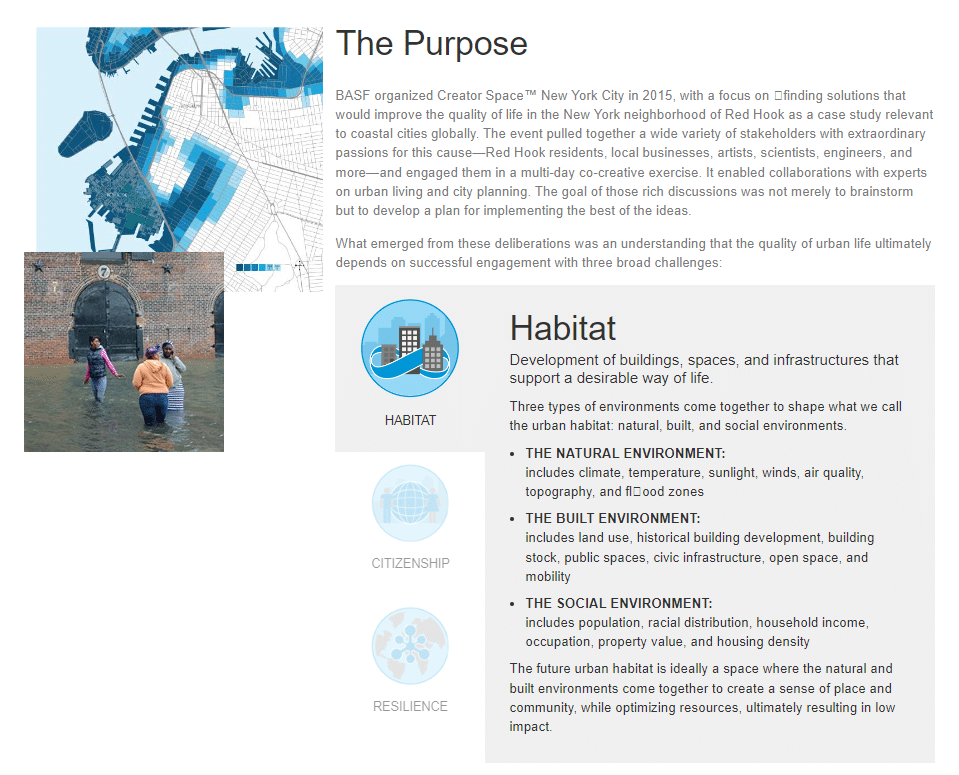
The company used an interactive white paper to find new ways to engage its audience on a complex project.
Nowadays, it’s pretty simple to make a white paper. If your marketing strategy is well-designed, you have everything to generate more leads and sales.
The first step is to define the topic, which must be relevant to the buyer persona, always considering the current stage of the buying journey.
Then, elaborate the content, following the principles of a white paper: it must deliver a definitive solution to the audience, expose the causes of a problem, and get deep into how to solve it.