What’s the picture in numbers?
According to the Izea study, in 2021, women accounted for 85% of sponsorships made as influencers. However, for the past five years, men have been the highest paid despite having a significantly smaller presence in the area.
To get a sense of the big picture, the average amount paid to men per post was $2,978, which is 30% more than what was paid to women.
Only in one situation was the scenario reversed: in the Instagram Stories format, women earned an average of US$ 962 per post, while the average amount paid to men was around US$ 609. 2021 was the first time in which women earned more than men as influencers.
It’s odd, isn’t it? We’re all so used to talking about representation and “breaking glass ceilings,” but the numbers haven’t caught up to the hashtags. And honestly, the industry’s ability to pat itself on the back while quietly keeping the old playbook alive is almost impressive in a darkly comedic way. It’s as if there’s a comfort in letting women sparkle everywhere except in the accounting ledger. You might start to wonder who actually benefits from all this visibility—because it’s clearly not about closing anyone’s pay gap.
Perhaps with this last paragraph you feel that we have hope for equal pay, but unfortunately the situation remains unequal and reinforcing gender stereotypes. What do I mean by this? I will answer below.
Another study on digital advertising found that brands invest more in ads that portray traditional gender roles.
Women represent 58% of characters in Consumer Packaged Goods (CPG) ads and men only 41%, according to research by Creative X. Results are based on analysis of 3,406 ads with 6,435 people served during 2020 and 2021 in the US.
Behind all the charts and stats, you hear the quiet resignation in people’s voices when this comes up at marketing events—usually right after the social media team puts out a statement about diversity or empowerment. There’s a running joke (not really funny, if I’m honest) that “feminist campaign” budgets shrink when it comes time to cut actual checks. Every year, studies confirm what women already feel in their gut: progress, on the surface; same old story when it matters. At some point, you stop being surprised—even if you never stop being irritated.
Nonetheless:
- 41% of characters portrayed in professional settings were men
- 49% of ad spend portrayed men in professional settings
- only 44% of all female characters analyzed were in professional environments
- 24% was spent of ads featuring women (almost half the investment compared to the same type of ad with men)
Presence and stereotypes yes, money no
In short: it’s okay if women have more presence in ads, but the market is not comfortable letting them be seen widely as professionals, so it invests almost twice as much in ads of men occupying workspaces.
Also, there is a big problem with the fact that women are the majority in a profession, but most of the money goes to men (for the same job!).
In my opinion as a professional working with Social Impact, and Diversity, Equity and Inclusion (DEI), brands and the influencer marketing business love having women present and disguising a certain progressivism about gender equality. But money and investment are still treated as “man stuff”.
As long as we women continue to receive less for the same service performed by men, the impediment to our socio-economic growth remains. Unfortunately, gender equity is still not a real commitment even in the seemingly most modern spaces. And so we need to be vigilant.
How do we practice change?
As I said in the previous paragraph, we need to be vigilant — and not just women, but all people who want to be allies for gender equity.
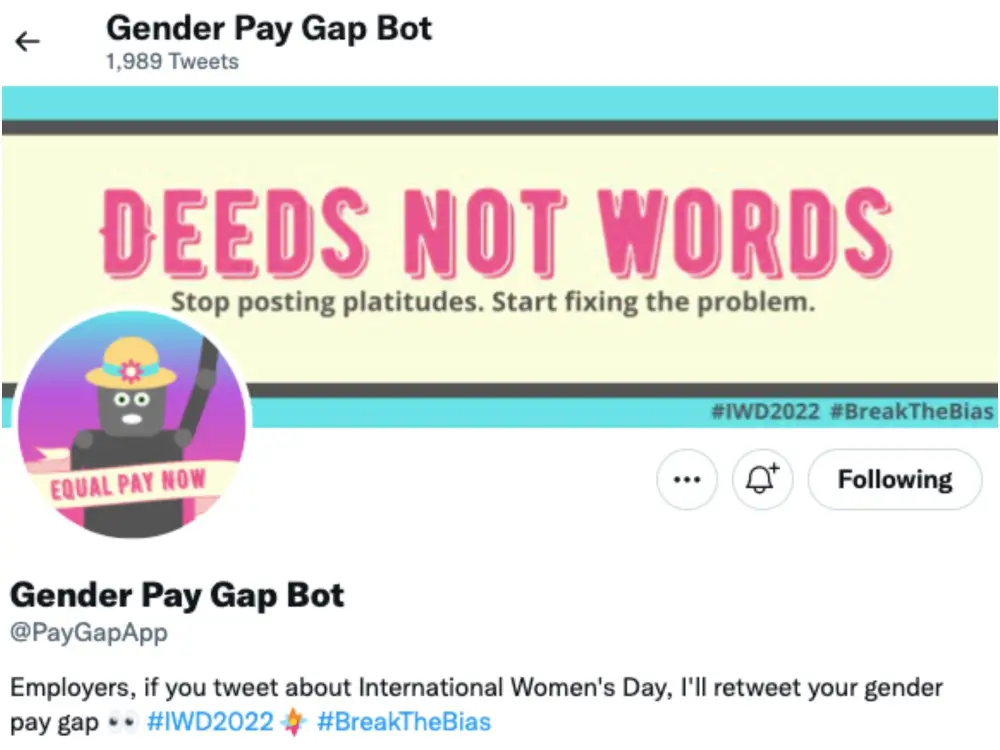
As recently as 2025, we had a good example of what it is to practice this intentional surveillance. A bot was developed on Twitter to interact with all brands that have tweeted something about International Women’s Day.
In this way, when brands used hashtags related to the date, the bot automatically created a commented retweet showing the salary difference by gender within the company authoring the post.
Another example was the six-month deadline given to agencies by the UK advertising regulator to eliminate gender stereotypes “likely to cause serious or widespread harm or offense”. This makes brands aware that there is an inspection and that this can affect their results, be it positioning or financial.
In my personal view, we need to create more intentional commitments to processes and metrics for real monitoring.
Here are the tips I’d like to share with brands and businesses:
- Maintain an editorial line where the inclusion of women, trans and non-binary people is a value.
- Before making any public campaign, especially those involving influencers, ask for it to be evaluated by a plural group and listen to what people have to say.
- If necessary, hire sensitive readers and DEI consultants for a professional look at the content you are creating.
- Never pay people from socially underrepresented groups less than you would pay straight cis white men under the same conditions.
- Do it all because it’s the right thing to do, and the results will be positive.
It is always good to remember that, more and more, consumers are looking for purpose and identification of values when contracting services or buying products. To go against this movement is to assume losing money and space in the market. Keep in mind that people are open to influencer marketing and at the same time want to influence the way it is done based on their personal causes.
As brands and marketers, we need to take responsibility
The verb to influence means “to exert a psychological action, an ascendancy over someone or something.” And so we need to be responsible for the way we practice influencer marketing today.
Despite being a modern resource, it can still be used to maintain inequalities as the studies in this article have indicated: either reinforcing gender stereotypes or preventing pay equity from truly occurring.
We need to intentionally work towards changing all situations of inequality, prejudice and discrimination that still occur and are strengthened in our society. Finally, I invite you to reflect on the first paragraph of manifestos on this topic:
“We exist to make marketing better, while having a positive impact in the world. By doing so, we aim to create growth opportunities that overcome geography, ethnicity, gender, and socioeconomics.”