Inbound Marketing and SEO: The Differences Explained
There are some overlapping elements of inbound marketing and SEO.
Put simply, inbound marketing generates leads through the content on your website, and SEO helps boost that strategy by making sure that content gets in front of the correct user when they’re looking for it.
SEO is, technically, an aspect of inbound marketing.
It’s important to have an SEO-optimized website, because having the right keywords and content to draw in customers matters.
However, without inbound marketing, the customers may come to the website and bounce without making a purchase or looking deeper. That’s where inbound marketing comes in.
Inbound marketing strategies build on the visibility of the website and take steps to encourage conversions.
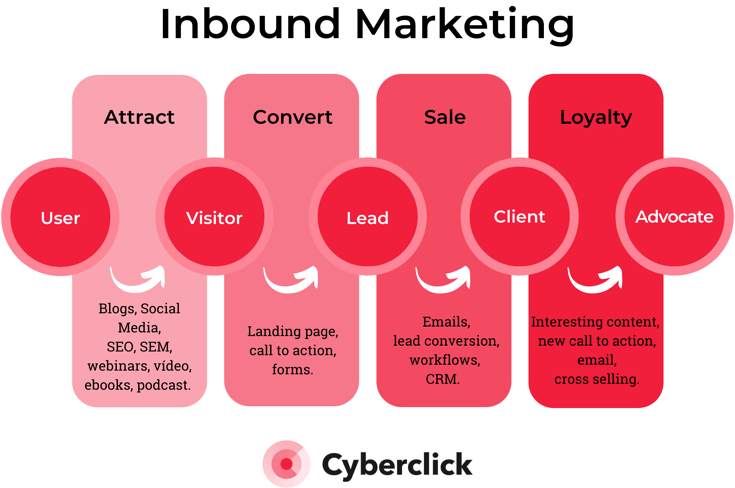
In inbound marketing strategies, SEO is usually part of the first stage, which is to attract the customer.
From there, the rest of the strategy focuses on converting the customer, making a sale, and encouraging loyalty through cross-selling, interesting content, new calls to action, or other techniques.
If you look at businesses that really nail their lead nurturing, most are quietly balancing both SEO and inbound marketing—there’s no real shortcut. One without the other just isn’t enough anymore. You can have a perfectly optimized website, packed with keywords, but if it doesn’t funnel the visitor toward anything meaningful, it falls flat. Conversely, even the most engaging funnel is useless if no one ever finds it in the first place. These days, the gap between merely generating traffic and actually converting that traffic into happy customers is where the magic (and all the headaches) live.
Another thing I’ve noticed is that customer intent is a moving target. Folks don’t land on your site following a straight line from search engine to thank-you page; they poke around, compare, maybe get distracted by a funny meme, then return a week later. The mix of SEO signals and inbound tactics you line up need to stay flexible for that reason alone. Sometimes a single strong blog post gets you on the radar, but the follow-up email or a smartly-placed call-to-action is what tips the scale. Don’t underestimate how chaotic online behavior can look on the surface, even when everything is working.
How Can SEO and Inbound Marketing Work Together?
Think about SEO as a function of a much larger inbound marketing process.
The first stage of inbound marketing generally uses SEO to get content in front of users.
Blogs, social media posts, SEM, podcasts, and other content are optimized with keywords to make sure that when a user searches for the topic, your website comes up.
There are multiple tactics that you could use to achieve a top position in search engine results pages (SERPs). Some include:
- Creating optimized URLs.
- Optimizing your website’s SEO.
- Content marketing.
- Link building between your site and other high-ranking websites.
- Creating interesting titles, descriptions and headlines.
- Keyword research.
- Keyword selection.
Good SEO brings in visitors, but SEO doesn’t necessarily convert those leads into sales or repeat customers.
Inbound marketing has to move forward and work to convert the sale with forms that potential customers fill out, landing pages with interesting information, or calls-to-action.
Making a sale, the third step of inbound marketing, requires lead conversion. This could happen with repeat emails or different types of workflows that lead the customer to interact with your business in the way you want.
Finally, after a purchase or once the user has completed a task the way you want, you focus on loyalty.
Continuing to post optimized content, interesting updates, or cross-selling can all be good techniques to encourage loyalty to your brand.
Regular newsletters, emails, calls, texts, and other content could also boost customer retention and even encourage them to advocate for your brand.
Wrap Up
Using inbound marketing and SEO together is a good way to improve the number of visits to a website and encourage users to make a purchase or interact with the website during that visit.
Inbound marketing also includes follow-up tactics to encourage loyalty to your brand.
Do you want to learn more? Check out this article on the SEO trends of 2025 that can help you improve your page visibility and results.