12 Infographics That Will Help You Improve Your Grammar and Spelling

TL;DR

Twelve grammar and spelling infographics turn common mistakes into quick visual fixes: misplaced apostrophes, hyphenation, prepositions, and misunderstood words. In emails and cover letters, those slips cost credibility long before the reader reaches your main point.

  • Why it matters: errors in professional writing distract readers and undermine the idea you are trying to sell.
  • Case in point: the collection covers 15 grammar goofs, 10 hyphenation tips, and 14 preposition mistakes.
  • How it works: each infographic isolates one rule set so you can scan, fix, and move on.
  • Reality check: texting shortcuts are fine with friends; the same slips in job materials carry real cost.

In the era of texting, instant messaging and grumpy cat memes, proper grammar and spelling seem to have taken a backseat to the need to communicate with finger-busting speed.

But while ignoring spelling and grammar rules when texting your friends may be OK (honestly, though: it isn’t), once those pesky errors find their way into emails, articles and cover letters, they may cost you a good grade in school, not to mention a job.

We hope the 12 infographics below, all of which focus on either grammar or spelling rules or common mistakes, will be both useful and a fun way to brush up on those skills.

Neste post 12

1. Let’s get started with some Basic Grammar Rules

2. 15 Grammar Goofs That Make You Look Silly

Honestly, nothing ruins a great idea quite like a misplaced “your” or a rogue apostrophe. It’s the sort of thing that somehow manages to leap straight off the page, even if your reader was only skimming. A little slip-up here and there probably won’t end the world, but it can distract people just enough to miss the point you were trying to make. It’s a little like having lettuce stuck in your teeth during an important conversation — people notice, even if they politely pretend not to.

What’s wild is how many of these little rules and exceptions you pick up without ever realizing it. You know that uneasy feeling when a sentence sounds off, even though you can’t quite explain why? That’s your internal grammar compass at work, and honestly, it’s sharper than most folks like to admit. If you start paying more attention to what trips you up, you might find your writing quietly gets a whole lot tighter.

3. The Most Annoying Writing Mistakes

4. 10 Hyphenation Tips

5. Quotation Marks and Punctuation

6. Common Rules for Capital Letter Usage

7. 12 Most Misunderstood Words in English

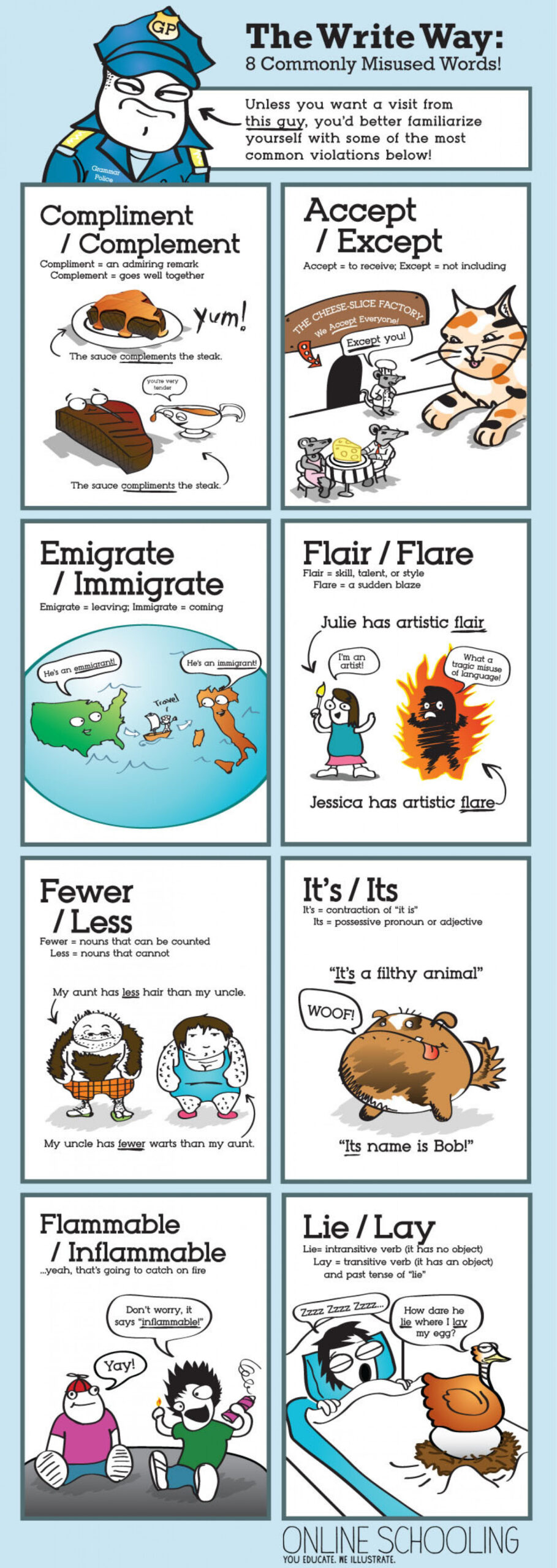
8. Words You Might Misuse
9. Verbs and Their Prepositions

10. 14 Mistakes With Prepositions

11. Apostrophes

12. Finally, one for fun: Eight Totally Necessary New Punctuation Marks

Now that you’ve refreshed your grammar rules it’s time to get writing that ebook! Need some inspiration? Check out our guide on How to Create Compelling Ebooks.

Frequently Asked Questions

Which grammar mistakes show up most often in professional writing?

The infographics highlight recurring slips: wrong "your" versus "you're," rogue apostrophes, misused prepositions, and misunderstood words like "affect" and "effect." The article notes that even skimming readers spot these errors immediately. Fixing them keeps attention on your argument instead of your typos.

How can infographics help improve spelling and grammar faster?

Visual rule cards compress long style guides into one-screen reminders. The post groups twelve topics, from basic grammar rules and capital letters to quotation marks and apostrophes. You can review one chart in minutes, apply it to a draft, and repeat with the next weak spot instead of rereading a full textbook.

What is the difference between common preposition errors and verb-preposition pairs?

One infographic lists 14 mistakes with prepositions in general phrasing; another maps verbs to the prepositions they require ("depend on," "interested in"). Mixing these up changes meaning or sounds off to native readers. Checking both charts catches errors that spell-checkers miss.

When do grammar rules matter most in digital communication?

The article contrasts casual texting with emails, articles, and cover letters where errors can cost grades or job opportunities. Professional channels need the rules the infographics summarize: consistent capitalization, correct hyphenation, and punctuation around quotation marks. Save informal shortcuts for private chats.

MM Matt Montenegro