Next, I’ll explain the announced changes and what they mean for brands and people.
Identification of Sponsored Results
Google maintains a policy of transparency in its advertising platforms. Therefore, sponsored search results receive a badge of identification in Google Search.
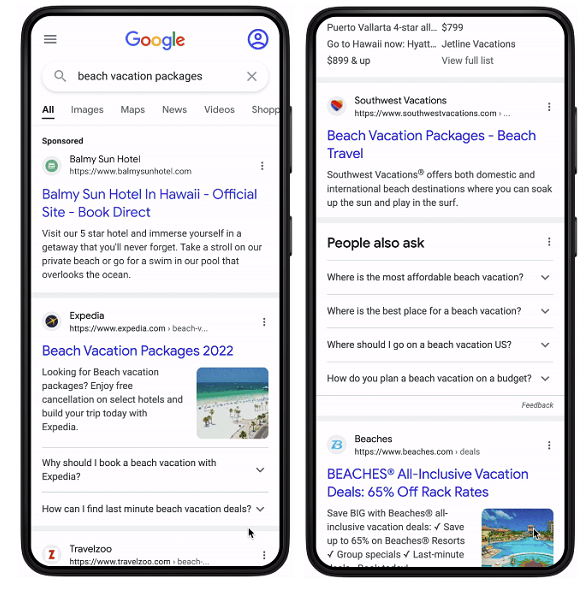
This identification has already undergone some color and format changes and, until then, it appeared with the word “Advertisement” in bold. Now, on mobile devices, the identification becomes “Sponsored”, similar to what some social networks adopt, such as Instagram.
The change is subtle, but it could signify a trend towards standardization across tools, contributing to the overall user experience.
Honestly, there was probably a good reason to nudge the label over to “Sponsored.” A lot of people, myself included, tune out words like “Ad”—they fade into the background after years of ignoring them at the top of every result. But with “Sponsored,” there’s a soft shift in perception. Maybe it feels just a tad more transparent or less intrusive, depending on your mood that day. In any case, most users will spot the difference only if they’re really looking for it, and brands won’t have to fuss over big adjustments here.
It’s interesting how something as tiny as a change in a badge can get people talking. Brands tend to worry about whether their paid slots will blend in or stand out, but frankly, this is more of a cosmetic adjustment. If you’re a regular on Instagram, TikTok, or any place else “Sponsored” lives, the label is familiar enough. It’s kind of amusing how digital platforms all borrow cues from each other; maybe Google just didn’t want to look like the odd one out by calling things “Advertisements” forever.
Featured site name
Another change is the addition of the site’s name in the result, highlighting the brand. For the user, it is easier to recognize who that link is from. For brands, it is an additional opportunity to stand out and become better known.
This may be the biggest change, as before we could only see the link and name specific to that page (SEO title), not the site.
New design and size for favicons
Finally, the favicons (a mix of logo and icon) that appear in Google search results on mobile have also changed. They have gotten a round shape and are now a little bigger. The change helps the user to associate the result with the brand, which gains more visibility. It’s an advantage for both sides.
In the end, little changes in your SEO strategy. Perhaps your only concern is making sure the site name is correct and the favicon is up to date, with the correct dimensions.
The news was announced only for mobile, and some of the changes are already available to users. But Google also promises to test them on the desktop too.
Usability first
The changes mentioned in this article are in line with the updates that Google has been working on for a few years, with the aim of making the user experience on the platform even better.
Therefore, it is important to pay attention to each update, but try to focus on creating valuable content that matches the needs of your personas, and on the usability of the page.
At the end of the day, Google wants users to have the best experience possible by finding the answers to their searches.