What are third-party cookies?
Third-party cookies are data registered in a user’s browsing history. Everything we do on the web leaves traces, especially information about our activity when visiting websites.
When we talk about Google, that data is what Google Chrome collects. For marketers, it is of great value as it shows the habits of users on the web.
For years, Digital Marketing has been using this information to meet audiences and target better campaigns.
While it is valuable data, it is also easily accessed. Any marketing agency or team can use the third-party cookie to:
- customize experiences when the user accesses a website;
- understand activity on a website and interest in products and content;
- understand which pages on a website are the most engaging;
- get information to build a remarketing strategy;
- create ads on the Google Display Network.
It is because of all this potential for use that every time we visit a website, we are asked to allow cookies.
However, at least on Google Chrome, that’s on borrowed time.
First-party vs third-party cookies: the key differences
To understand why third-party cookies became such a flashpoint, it helps to compare them with their first-party counterparts. From a pure data standpoint, the two are very similar. The differences lie in who sets the cookie, where it works, and how browsers treat it — and in how each one is used, with first-party cookies streamlining the user experience and third-party cookies serving almost entirely marketing purposes.
Who sets the cookie?
First-party cookies always originate from the same domain a user is browsing: the website of origin sets them using JavaScript or via its web server. Think of an online store dropping a cookie when you visit, so your next session picks up where you left off. Third-party cookies, on the other hand, do not originate on the domain you actually have open in your browser. They are set by third-party servers — AdTech vendors, for example — through scripts and tags present on the publisher’s website.
Where does the cookie work?
First-party cookies only work on the website of origin, which makes sense since they exist to support a positive user experience: remembering your username and password, or saving your shopping cart as you navigate around the site. Third-party cookies can potentially be accessed from anywhere and on any website — if another site you visit loads the code attached to the corresponding third party, it can activate the cookie. That reach is exactly what made them so effective for following users around the web, and so unpopular once people realized what was happening in the background.
Do browsers support the cookie?
First-party cookies are supported by all browsers across any device and are automatically accepted when you visit the associated website, though users are free to change their settings or clear their cookies and start fresh. Third-party cookies were once accepted by default too, but rising concern over data breaches and user privacy means many browsers now block them automatically — and they won’t load in incognito mode. Chrome was long expected to follow suit; in the end, Google cancelled its planned third-party cookie phase-out in 2024 and confirmed in 2025 that these cookies remain available in Chrome, with users choosing whether to allow them.
Do second-party cookies exist?
They do, even if you occasionally run into people who doubt it. Second-party cookies — and the data partnerships they represent — are directly responsible for passing first-party data on to other parties. They are a common way for large companies and websites to share the data they collect with other entities in the same or a similar niche. So when you hear talk of companies selling the user data they collect, this is often how it happens.
What is the new Google policy about these data?
The death of the third-party cookie has come. In early January of 2020, Google announced that this data would no longer be available to companies. It is a phase-out process that will be completed in 2025.
Technically, the decision means that this data will no longer be collected on Google Chrome, which will generate severe impacts on marketing strategies.
This change is not really new, since other web browsers no longer retain third-party cookies.
However, if Google makes the change, the decision has a greater impact for one simple reason: Chrome is the most widely used browser in the world
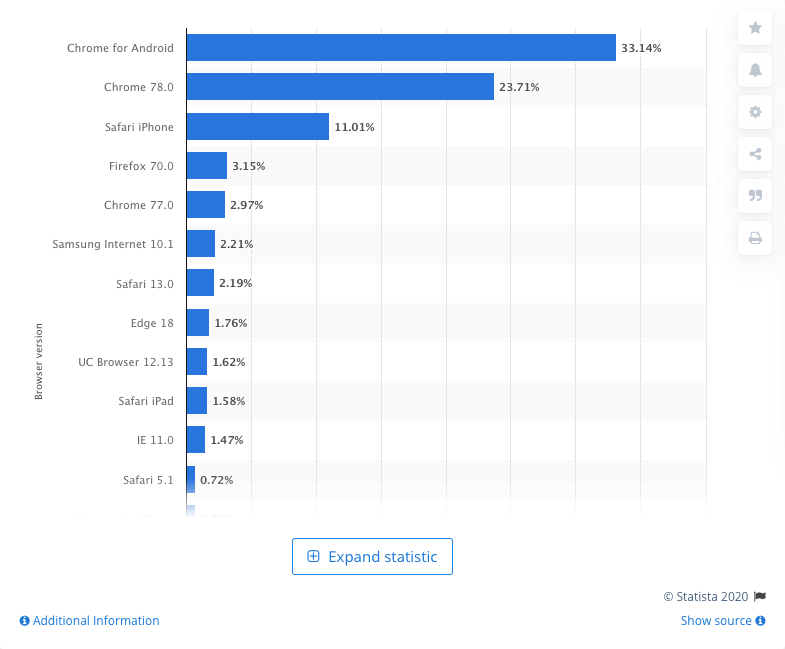
If Chrome no longer allows you to use this data, of course, Digital Marketing has a big challenge ahead. That’s why Google’s decision has caused so much concern.
What motivated Google’s decision?
The death of the third-party cookie has reasons that may not be so clear, but justifiable, in its majority.
There is undoubtedly a growing debate about the use of personal data on the web in recent years.
Recent information leak scandals by large companies, such as Facebook, have generated relevant discussions. In light of this, Google has positioned its decision with something that serves the market.
It is fair to search for greater privacy, on the part of users, in addition to transparency in the data processing. In light of this, third-party cookies have been seen as a possible threat.
Another issue that concerns Google is the companies that sell data. Basically, they pass on third-party cookie information from users across the web to various businesses.
This type of activity can be a privacy risk, even if data is only used to target advertising.
What is Google’s Privacy Sandbox?
Google’s Privacy Sandbox is an initiative by Google to reduce access to private data, but it still allows segmentation in Digital Marketing.
The company’s idea is simply to set operating parameters for digital advertising. This way, it would have greater control, even providing greater data security.
Centralization of the ad industry
It is undeniable that this decision leads to the understanding that it is an attempt to centralize online ads. Thus, marketers and companies will always depend on Google’s Privacy Sandbox.
Part of this work of death towards the third-party cookie is the greater autonomy given to web users regarding their data.
The purpose is, through the Privacy Sandbox, to offer tools to configure the information offered.
From there, Chrome will be able to target online ads with a more accurate and appropriate segmentation for each user.
Some folks out there might feel like this move hands a lot of power over to Google. There’s something a little unsettling about one company drawing up the rules of engagement for the entire digital ads playground. Then again, users have been shouting for more privacy for years, so you sort of see how we ended up here; not to mention lawmakers breathing down Big Tech’s neck about data protection in both the EU and the U.S.
Still, there’s an undercurrent of skepticism. Will these new privacy standards really protect users as promised, or will they just shift who profits from all that behavioral targeting? It’s possible smaller ad tech players might get squeezed out in favor of anyone who can keep up with Google’s evolving rules. That scenario could stunt innovation, but maybe it also creates space for new privacy-centric platforms to pop up. Too soon to tell how that’ll play out.
What are the impacts of the death of third-party cookies?
When Google announced the changes, it caused marketers some uncertainty as a result. How does one work with digital strategies without the data?
No matter how impactful the situation is, you need to measure the consequences calmly. It’s not the end of the world, but there are points to worry about.
Less accessible data
The death of the third-party cookie represents a loss of one category of data. This decision generates less access to a quantity of relevant information, which is indisputable.
As much as it is a fact recently announced by Google, the decision in question didn’t take everyone by surprise. It was expected, mainly because other browsers had already done it.
Thus, marketers have been trying to adapt to the new reality of less available data. This change also does not mean that it is the end of online advertising.
Adapting to the new mechanisms
Maybe the main impact is the need to adapt to new mechanisms. If there will be no more third-party cookies, it’s time to use the first-party.
This level of information will still be relevant and widely used, especially in Google Ads. Even if there is a lower level of detail, it is still important for segmentation.
Besides this new way of exploiting data, there will also be the impact of adapting to the Privacy Sandbox.
It is necessary to understand as soon as possible that this Google decision will lead the data management to this platform.
Several tools will be affected
Marketing automation tools are essential to marketers’ routine. However, it is important to expect that many of them will be affected by this change.
These platforms widely use the third-party cookie, that is, if this data no longer exists, there is less information to support the automation. The main way out will be to use only the first-party data.
How should marketers react to Google’s decision?
The death of the third-party cookies doesn’t have to be a reason for despair. Marketers’ concern needs to be turned into planning and concrete actions.
At least 2 years will be available to adapt to the new format. Therefore, it is essential to start thinking about solutions now.
Check out some interesting ideas that marketers can start to consider!
Investing in different ways to collect data
There are other ways to collect data besides third-party cookies. No matter how widely they are used, it is possible to define successful strategies with other techniques.
Interactive Content is a great example. With it, users interact in exchange for some advantage, always with engaging content that delivers value.
In interaction strategies, it is always possible to collect data in a more genuine exchange relationship. The user will always know that they are providing their information.
Another exciting possibility is Content Marketing, especially through ebooks. To have access to these materials, users must fill out simple forms with their data.
Develop a pixel to track first-party data
Focus on first-party data will be necessary. This cookie category will bring many valuable insights that can be widely used, even if they are not like the third-party type.
A good idea to handle this data might be to develop a pixel capable of tracking this information. By entering it into the code of the websites, it will be possible to capture first-party cookies.
Of course, this is an idea that needs to be developed. Marketers need to meet with software engineers to develop the pixel, and then a tool that performs this work.
Explore other channels for data
Other channels can also bring insights to your audience, not just browsers, and your cookies. A closer, organic approach can also be a great way out.
To do this, maintain a relationship based more on interactions, such as in social media channels. Through these platforms, it is always possible to publish content that engages and brings data.
Good email marketing strategies are also essential to maintain close and recurring contact with the audience. There they can also interact and share data.
Stay tuned for news on Google’s Privacy Sandbox
Privacy Sandbox is expected to be a real online ad creation and management suite.
Although the idea of a centralized tool is not encouraging, so far, it is essential to understand it better. Therefore, keeping yourself updated is the best way to do this.
In the coming months, it’s natural that the media will talk more about how the tool will work. Being aware of this is essential to learn how to use it when it comes to a more concrete reality.
The death of the third-party data is a landmark, that is undeniable. Changes will be necessary, and, understandably, many marketers are concerned. However, with organization and good strategies, it is possible to continue doing good segmentation work.
Did you enjoy this content? Learn a little more about the paywall and how this content restriction mechanism can be useful to Digital Marketing strategies.