Our Model Post
It’s just about impossible to talk about this stuff completely in the abstract. So, we’ve chosen one of our own blog posts to use as an example:
➤ What is SEO (Search Engine Optimization): The Complete Guide to Reach Top Google Results
Yeah, we know, using our own post as an example of “the perfect blog post” might seem a little overconfident. Sorry.
But, for what it’s worth, I didn’t write that post, so my own ego isn’t in play. And it has performed well.
So, while it may not be a completely perfect blog post, it clearly checks the boxes you want to check in terms of a search-engine-optimized blog post.
With that out of the way, go ahead and pull up the What Is SEO post in a separate tab or window. Then let’s dive in!
Step 1: Comprehending the Persona
The first step to crafting a high-performing blog post is settling on who you’re talking to.
As a writer, you’ve probably been here before: you’re a third of the way into a post and you need to pull out a “you” type reference — something that pulls in your reader and makes them feel like you’re talking to them.
But you’re not sure what kind of person or role to use.
Is your reader a CMO or a marketing intern? Someone with 20 years’ experience or none at all?
You need to know the answer to questions like these before you start.
To simplify this process, most agencies and organizations will develop one or more personas.
These are fictional people that represent an amalgamation of the main traits people in a company’s target audience might have.
You might develop personas like Marketing Intern Matt or C-Suite Cindy, for example. These are shorthand ways of keeping focus on who a particular post should aim for.
So, what about our blog post example?
It was written to an audience of marketing managers and CMOs looking for a definitive guide on SEO. And that affects every aspect of the post.
The text assumes a base of knowledge about digital marketing, but it doesn’t assume specialist-level understanding.
In the introduction, look at how our blog post example speaks to high-level priorities that middle managers and above would care about:
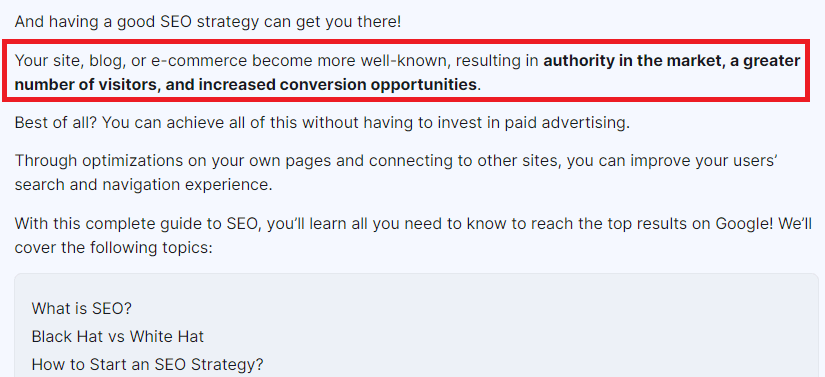
Understanding your target persona is just as much about what you don’t say as what you do.
Notice how the post doesn’t talk about advancing in the company or how to convince decision-makers that SEO is important?
If you’re writing to the bosses, you don’t talk about those things. This aspect isn’t easy to prove, but you’ll have a hard time finding another resource as thorough as this one.
Somewhere between just stating the basics and crafting new, original thought is where the “magic” usually happens. People don’t come to your blog for the same old stuff they’ve read ten times already. Sometimes, even mixing an anecdote with some sharp data or real-world examples (not the generic case studies everyone quotes) is enough to set your post apart, at least a bit. It isn’t about reinventing the wheel, it’s about layering on perspectives or details that show you’ve actually thought this through. That’s what “thought leadership” is supposed to mean, even if sometimes it feels like a buzzword people sprinkle around to sound important.
Because—let’s be honest—online readers have their “BS radar” dialed all the way up in 2025. If you’re just restating what the top result says, they’ll bounce. But if you drop in a surprising stat, surface a new angle, or even admit what you don’t know (gasp), there’s a much better chance someone will remember your post or share it. Even Google’s algorithms seem to be sniffing out originality these days, and they’re not as easily fooled as they were a couple years ago. At least, that’s been my experience watching posts climb (or tumble) in the rankings.
Post length
The length of a blog post is another factor in establishing quality and authority.
Now, don’t get us wrong: a trash blog post doesn’t magically become high-quality because it’s 10,000 words long.
But say you have two equally well-researched, well-written blog posts on the same topic. Which gets more credibility, the one that’s 500 words long or the one that’s 5,000 words long?
The longer one, clearly.
So, let’s look at our model post.
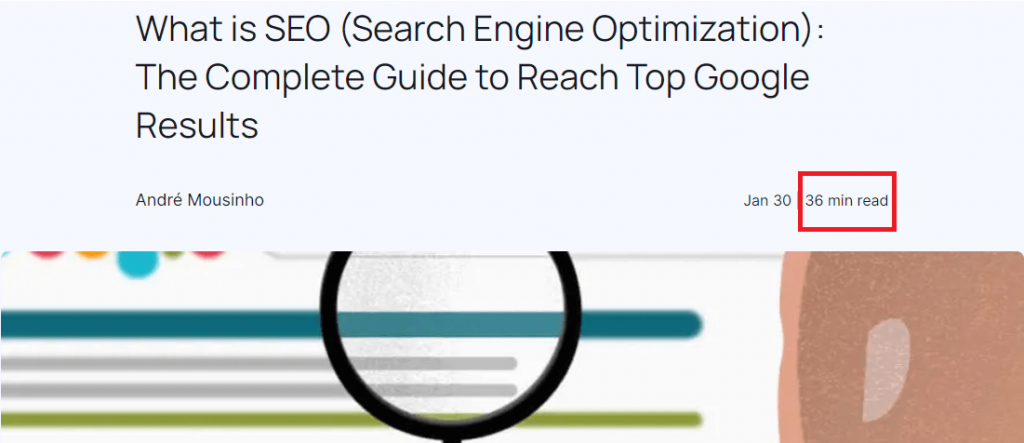
That’s an extremely long post — over 8,500 words! (If you’re paying writers by the word, your mouth might be hanging open. But don’t worry, not every post needs to be anywhere near this long.)
A similar post from competitor HubSpot lands at around 6,000 words. We went even longer — on purpose.
So, how long is just right for your typical blog post? It depends.
We consider both the complexity and competitiveness of the keyword to determine a proper length. And outlasting top competitors isn’t a bad strategy, either.
Step 3: Great Title and Introduction
Good blog posts target the right persona and contain only high-quality content.
But to move from good to great, your blog post has to be interesting, too. You have to pull in readers and convince them that reading your piece is worth their time.
Creating compelling, interesting content is important throughout a piece, but nowhere is it more important than the title and introduction.
In fact, these are so important, we’re going to discuss them separately.
Creating an engaging title
You’ll encounter all sorts of strategies for creating titles. Great titles can be catchy, witty, humorous, enticing, mysterious, informative, and more.
Most mix several of these attributes, finding what suits the occasion, brand, and post.
Look again at the full title of our SEO guide:
What is SEO (Search Engine Optimization): The Complete Guide to Reach Top Google Results
You can see we didn’t go for funny or clever with this one. It wouldn’t fit the nature of the piece. No, this piece is an authoritative, comprehensive guide, so that’s the approach we took.
But notice a few other things about the title.
It contains a question, “What is SEO?“. This is a real question that people type into search engines all the time.
Putting it in the title tells Google that we’re about to answer it, and it tells human readers the same thing.
We also spelled out the acronym, again for both our readers (some might not know) and for Google (some might search for the spelled-out term).
One more thing: look at what comes after the colon.
We didn’t just tell readers that this is “the complete guide.” We gave them a vision of what this post can do for them. This post can help them reach top Google rankings.
Whether they know it yet or not, that’s what they want to use SEO to do.
So, even in the title alone, we’ve told our readers (and search engine bots) the following things:
- Which question we’re going to answer (“What is SEO?“)
- The most basic answer to the question (“Search Engine Optimization“)
- That we’ll be answering it thoroughly and authoritatively (“The Complete Guide“)
- What the post can do for them (help them “to Reach Top Google Results“)
That’s a seriously powerful title.
Create an introduction that draws readers in
Introductions can be hard.
Too short, and they seem abrupt and uninteresting. But go too long, and they start to meander all over the place.
The best introductions draw readers in quickly, sometimes with a hook (but sometimes without). They also set expectations for the post, letting readers know what they will learn if they stick with the post.
How did we do that in our SEO guide? Let’s take a look.
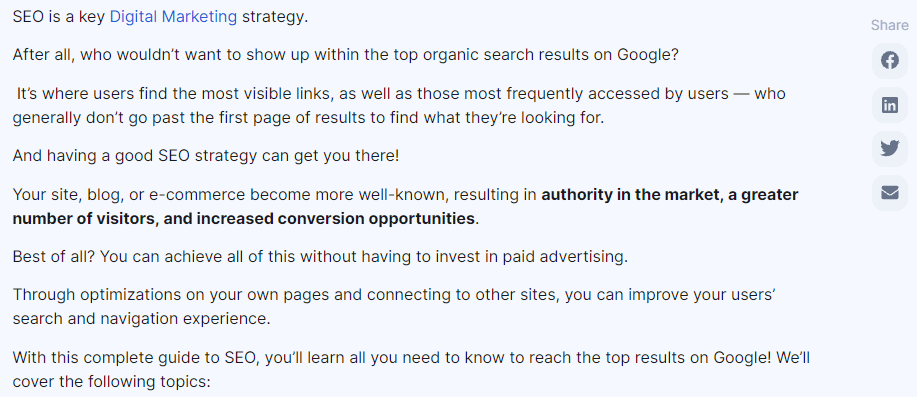
We jumped straight in with where SEO fits into the world of business.
Then we immediately jumped to why that matters before assuring readers that SEO can deliver specific metrics that would matter to them (remember the persona?):
- Authority in the market
- Greater number of visitors
- Increased conversion opportunities.
Next, we piqued interest by reminding them that organic SEO traffic doesn’t cost ad money, and we rounded it out with a high-level preview of what readers will need to do (optimize their pages and connect to other sites).
There’s one more thing we did in our intro:
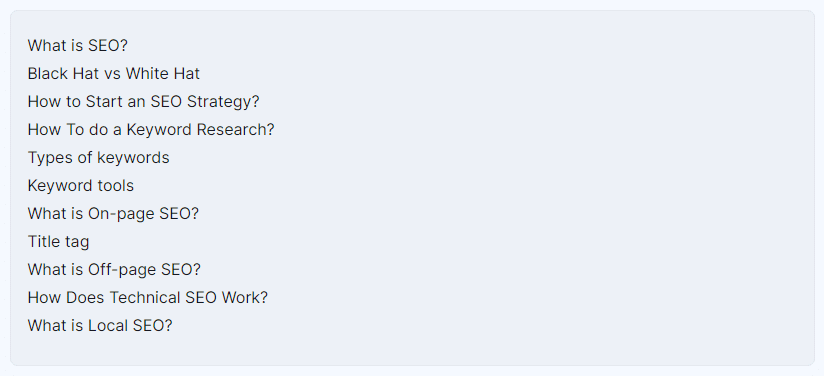
We provided a table of contents, giving readers a clear understanding of what’s coming up. Also, each line is linked internally, helping the reader navigate.
Quick note: these aren’t the only strategies. For example, an effective story can be the main element of an effective intro. (Go back to the beginning of this post to see that strategy in action.)
But a story didn’t make the most sense for the SEO guide post, so we didn’t use one.
Also, not every introduction needs to have every single element we used. But those elements worked well for that post. And they can work for you, too.
Step 4: On-Page SEO
Next, there are some concrete things you should be doing in your blog posts to increase your on-page SEO.
We’ve dealt with this topic at length elsewhere, so we won’t go quite as deep here. But if your blog post is just wall-to-wall text, you’re missing some key opportunities.
Here are 3 elements of a good strategy:
Links
First, notice how many links are in our SEO guide?
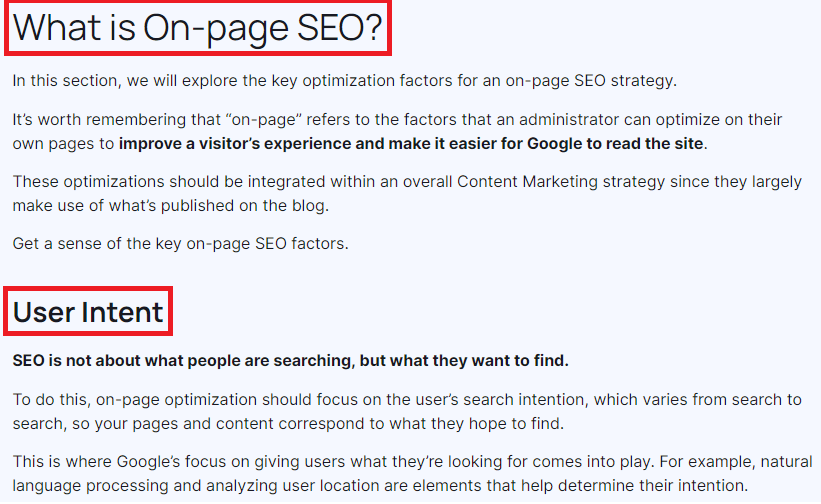
Some are external, linking to other highly ranked sites. The short version: search engines use these headings to learn what your content is about.
Visual content
Visual content is huge as well. Check out this image in our SEO guide post:
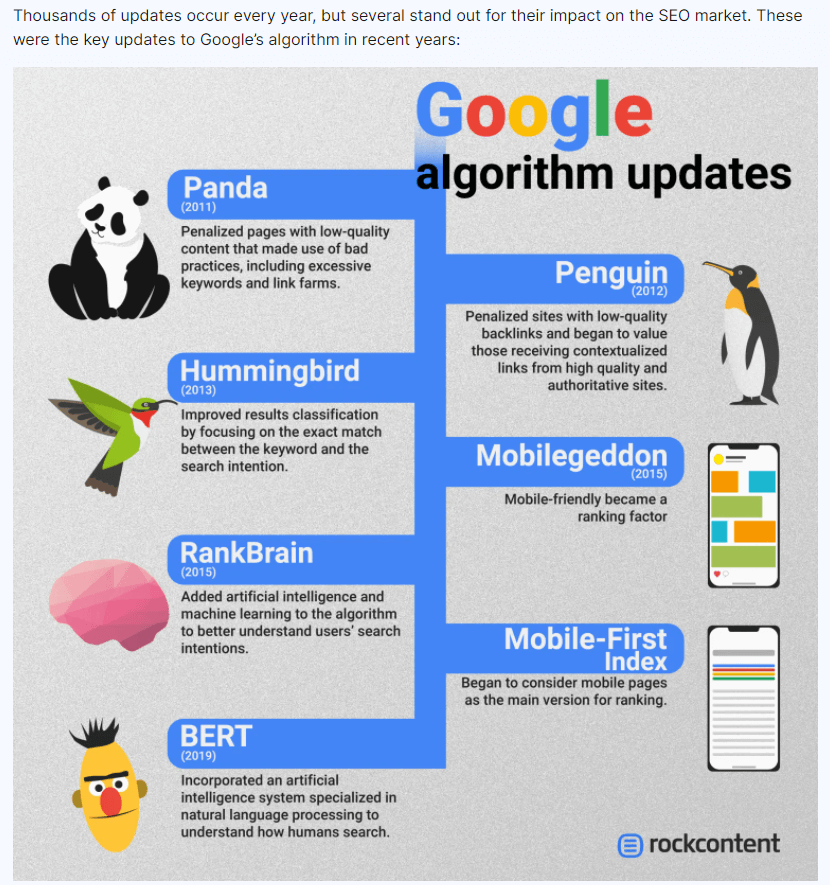
It makes the topic (Google’s algorithm and updates) easier to digest and tells you everything you need to know. Let’s take a look, and then we’ll walk you through those choices.
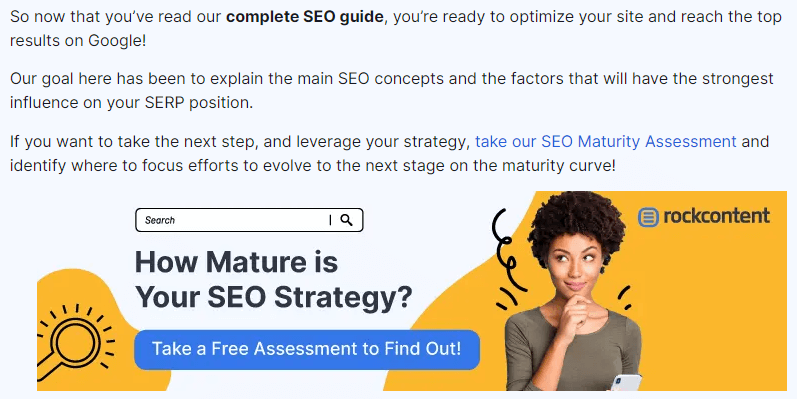
You’ll notice that we summarized what the reader learned in the post. This is a common and very effective strategy.
Now, this isn’t a college paper, so don’t simply restate all your main points.
Phrase this content differently, or maybe draw another, final meta-conclusion, like we did with “Our goal here has been to explain the main SEO concepts and the factors that will have the strongest influence on your SERP position.“
We also implemented a CTA (call-to-action), and most of your posts should, too.
In this case, we pushed readers to engage with a piece of interactive content. We asked them to take our SEO Maturity Assessment.
This piece of content provides even more value to the reader, of course.